






 Video
This clip isn’t available here any more. Watch or listen at the source ↗
How is Britain changing?
The defining geopolitical and social forces reshaping Britain.
Ryan Wain/Writing on the future of Britain
Britain’s best days can be ahead of it — but only if we choose renewal over decline. I write about the ideas, reforms and politics that could make this the decade Britain gets its confidence back.
Essays, free, in your inbox
From Resurgent Britain, my Substack — on the ideas and reforms that could make this Britain’s decade.
Op-eds, reports and commentary for newspapers, magazines and the Tony Blair Institute.
24 pieces · 7 outlets
Britain has the capability not just to survive a radically changing world but to thrive in it. The Budget should take AI seriously — starting with a preventative, AI-powered health system that stops heart attacks and strokes before they happen.
Labour’s agenda should be ‘technology for the many’: harnessing AI to transform public services and revive growth, built on cheap energy, sound public finances, strong defence, secure borders and alliances with America and Europe.
Makerfield gave Labour one last chance, and Andy Burnham’s campaign showed hope still galvanises voters. But hope dies on arrival in Westminster without a plan to turn it into results and finally confront decline.
Reform offers voters the chance to blow up the system. The answer isn’t incrementalism but a controlled explosion — radicalism from the centre that deliberately dismantles a failing status quo. (My contribution to a symposium.)
Crime is back at the centre of British politics, and recorded figures don’t tell the full story. Policing needs a radical, tech-enabled overhaul to restore public trust and actually make Britain safer.
AI and data make a fundamentally different state possible: always-on, personalised, proactive services that govern by ‘signal and steer’ rather than command and control — built on universal digital ID and outcome-based funding.
With Oliver Large
Leaders are tackling 21st-century problems with 20th-century machinery. My playbook: compete at the AI application layer, build AI-era institutions and digital ID, reform public services and become an electrostate.
Conspiracy theories have hijacked the digital ID debate. It won’t mean mass surveillance — it will make us safer, replacing the hacker’s dream of emailed document copies with one secure, verified way to prove who you are.
The government’s project must be to stop decline and transform Britain. The swing voters Labour needs want bold change on growth, public services and immigration — not incrementalism.
Digital ID has majority public support — 62 per cent for, 19 against. It’s the foundation of disruptive delivery and the clearest signal that government can rebuild a state that works.
With Jo Puddick
Momentum is with Reform, which thrives on the public mood rather than detailed policy. Labour must take the fight to Farage by starting a fight for Britain’s future.
Voters are volatile and want proof politics can deliver. Done properly, digital ID is disruptive delivery: public services at private-sector standards, and a real tool against illegal working.
The AfD’s rise reflects discontent and fragmentation: disillusioned ‘Outsiders’ are moving to insurgents, pulling Germany into the same structural disruption reshaping democratic politics everywhere.
Polling 12,000 voters in six democracies, we found ‘Insiders’ and ‘Outsiders’ united by a sense of decline. The message for progressives: disrupt or be disrupted — out-deliver the populists through technology-led reform.
With Peter Kellner, Jo Puddick, Alan Wager, Joni Smith, Robert Johnson, Kayla Crowley-Carbery, Alex Otway
AI will change everything, whether we like it or not. The progressive mission is to harness it for people — an enabling state where citizens control their own data. If we don’t, the populist right will.
Labour inherited plans that would starve Britain of investment and feed populism. Reforming the fiscal rules could free up £52bn for growth and public services.
Labour’s 2024 coalition is broad but fragile, spanning very different places and voters. What can hold it together is a shared concern about Britain’s trajectory — and a credible plan to change it.
Most Europeans back net zero but few trust governments to deliver it. Leaders must show credibly how emissions fall and who pays — or populists will exploit anxiety about the transition.
With Tone Langengen
Labour shouldn’t be tempted to defeat the government on Covid passports. They’re a sensible risk-management tool — and being reasonable and evidence-led is what wins votes.
Vaccinated people should face fewer restrictions, including quarantine-free travel, backed by a robust Covid pass — because vaccination sharply cuts onward transmission.
With Kirsty Innes, Brianna Miller, Daniel Sleat, PeiChin Tay
‘First dose to many’: by prioritising first doses for 29.6 million people, Britain could remove the vast majority of deaths and hospitalisations — with more supply, sites, staff and systematisation.
With Brianna Miller, Daniel Sleat
A model for mass testing that can start immediately and scale with capacity — using every available lab and regular antibody tests — so Britain can exit lockdown safely.
With Daniel Sleat
Polls aren’t neutral. Behind every published poll or model, a human being decides how to weight the raw data — and we should read them with that in mind.
The 8am GP scramble shows a broken system. The fix starts with a completely reimagined NHS App as the new front door — but without political grip from the top, it will only digitise what already exists.
Nothing matches that — try another word.
Summaries are AI-assisted.
Selected broadcast, podcast and event appearances.
VideoThis clip isn’t available here any more. Watch or listen at the source ↗
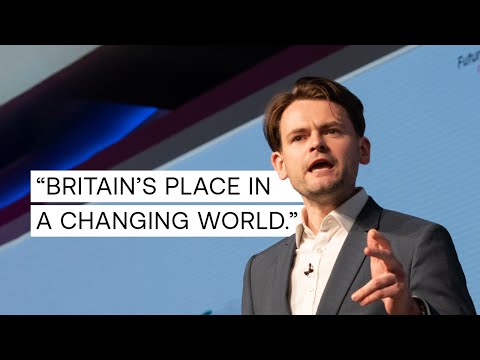
The defining geopolitical and social forces reshaping Britain.
This clip isn’t available here any more. Watch or listen at the source ↗
 Video
This clip isn’t available here any more. Watch or listen at the source ↗
Selected reader questions, answered by me. Challenges welcome — the best questions are often the ones I’d rather not be asked.
Latest answer: 14 October 2026
— Declan A. asked
Thanks so much for sharing this question, Declan. You're the first! I think the starting point for both questions is to appraise two things: 1. The state of the economy and public services in Britain and 2. How the wider world is changing. It's in bridging the gap between the two where Labour is at its best. …
Read the answer →No. 002
Your question could be next
Challenge an idea, ask about a policy, or ask how I’d handle a hard call. I answer selected questions here.
Ask a question
I’m a modernising Labour thinker working on how Britain renews itself — economically, institutionally and in the story it tells about its future.
I’m Senior Director of Policy and Politics at the Tony Blair Institute for Global Change, where I advise leaders around the world and develop policy for Britain. I conceived and led the Institute’s Future of Britain programme, and helped lead its pandemic work on vaccines and testing.
Before that I was a senior political adviser to the Labour Party. I’ve stood for Parliament before, and I believe the New Labour tradition — ambitious, reforming, relentlessly focused on the future — is what Britain needs in the 2020s and 2030s. Resurgent Britain is where I’m building that agenda in public.

Got a question about Britain, Labour, or an idea you think I’ve got wrong? It comes straight to me — not to a bot, not to an inbox nobody reads.
I answer selected questions publicly in Questions & answers. For anything else — speaking, media, or just to get in touch — choose “Get in touch”.